Laurel Hedge Overgrowth: How to Reclaim Control in Wroxham and Across Norfolk
Got an overgrown laurel hedge in Norfolk or Suffolk? We cut, reduce and reshape laurel across the region. Call S.J.Pond Services today.

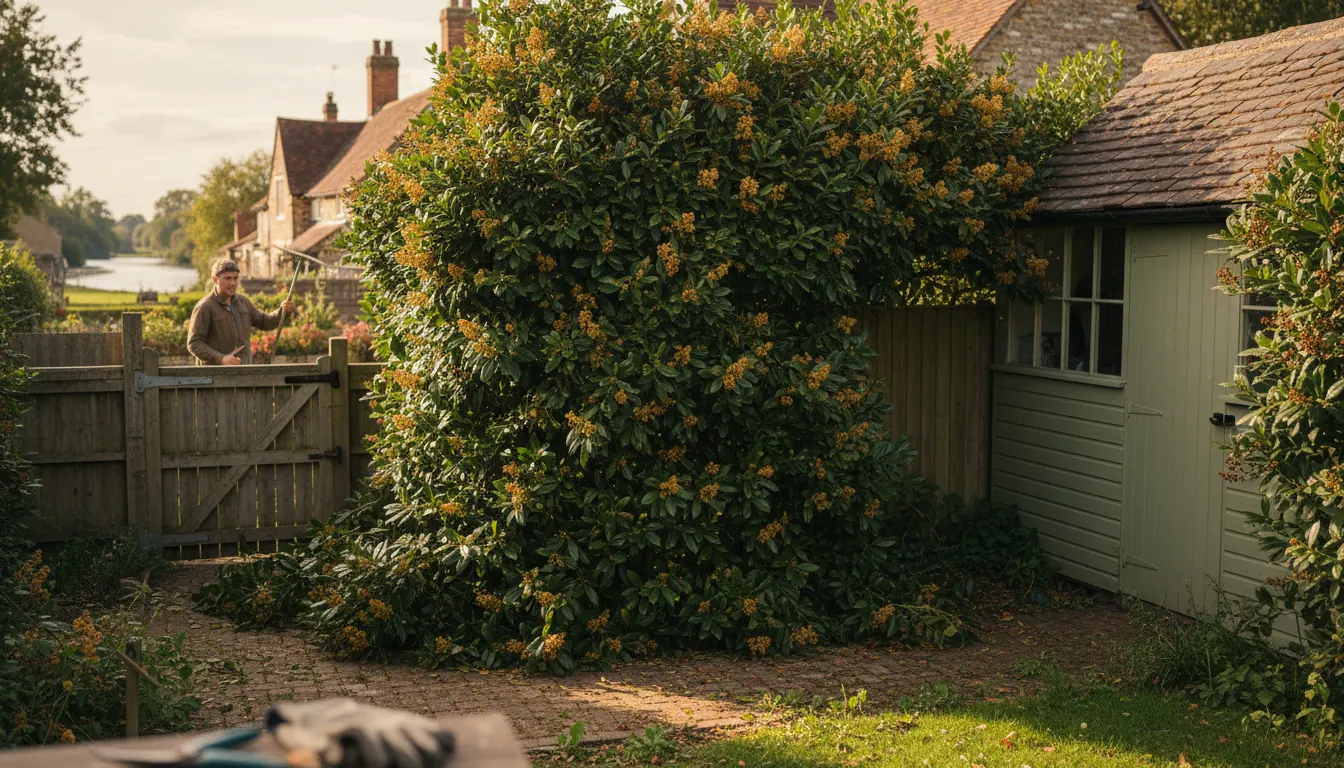
Laurel Hedges in Norfolk: Beautiful Until They're Not
Laurel is one of the most popular hedging choices across Norfolk and Suffolk, and it's easy to see why. It's tough, evergreen, fast-growing and gives you a dense, glossy screen that blocks out noise, wind and nosy neighbours. From the larger gardens around Holt and Fakenham to the suburban plots in Norwich and out towards Beccles in Suffolk, laurel hedges are everywhere.
The trouble is that "fast-growing" cuts both ways. Skip a year or two of trimming, and what was a neat 5-foot screen can easily become a sprawling, light-blocking wall of green that's swallowed the path, overhung the fence and started shading out everything in the border below it. That's when people call us.
We cover the whole of Norfolk and Suffolk, working from our base just north of Norwich in the NR11 area. Overgrown laurel hedges are one of the most common jobs we tackle, and this article explains what's actually involved, what to expect, and how to keep on top of things once the hard work is done.
Why Laurel Gets Out of Hand So Quickly
Laurel, particularly cherry laurel (Prunus laurocerasus), is a vigorous grower. In a decent Norfolk summer it can put on 30–60 cm of new growth. Left unchecked, even a hedge that was trimmed two or three years ago can double in height and width. We've seen hedges that started at six feet now pushing twelve, with branches thick as your wrist at the base.
Part of the problem is that laurel doesn't always look bad from a distance, so it's easy to keep telling yourself it can wait another season. Then suddenly it's blocking the light from the kitchen window, the neighbours are starting to mutter, and the whole thing needs serious work rather than a light tidy.
A few things that make Norfolk laurels particularly prone to getting away:
- Mild, wet winters along the coast and in the Broads area keep laurel actively growing for longer than people expect
- Fertile, well-drained soil in many parts of the county gives roots a strong run
- Large rural plots around Fakenham, Holt, Dereham and across into Suffolk often have boundary laurel hedges that were planted for privacy and simply never managed on a regular schedule
- Older properties with inherited hedges, where the new owners aren't sure what they've got or how hard they can cut
Can You Hard-Cut a Laurel Hedge? Yes, But Do It Right
This is the question we get asked most often about overgrown laurel. The good news is that laurel is one of the toughest hedging plants there is. It responds well to hard cutting, including being reduced significantly in height and width in a single session. Unlike some other hedging plants, it bounces back reliably, pushing out new growth from old wood.
That said, there are a few things to get right:
Timing matters. The best time to do a hard reduction on an overgrown laurel hedge in Norfolk is late spring (April into May) or late summer (August into early September). Cutting in late spring means the plant has the whole growing season ahead of it to recover. Late summer works well too, giving the hedge time to harden off before the colder months arrive.
Use the right tools. For a large, overgrown laurel hedge, a hedge trimmer alone won't cut it, literally. The stems can be thick and woody. We use loppers, pruning saws and, where the growth is heavy enough to warrant it, chainsaw work to take out the bulk before finishing with a trimmer. This is important: cutting laurel with a hedge trimmer on thick stems tends to bruise and shred the leaves rather than giving a clean cut, which leads to browning and die-back.
Don't panic about the bare look. After a hard reduction, a laurel hedge can look pretty stark. Brown stumps, exposed branches, gaps. It's alarming if you're not used to it. But within a single growing season, a healthy laurel will push out dense new growth and fill back in. Customers who've had this done are always relieved once spring arrives and the hedge comes back to life.
Cut to the right shape. A hedge that's wider at the top than the bottom will shade out its own lower growth over time. We always aim for a slight taper, wider at the base, so light reaches all the way down and you keep a full, dense hedge rather than a bare-legged one.
What the Job Actually Involves
When we come out to an overgrown laurel hedge, the first thing we do is have a proper look and a chat about what you're hoping for. Some people want the hedge brought back to a specific height. Others want it thinned as well as reduced. Some want to reshape it entirely.
Once we know what you need, we get stuck in. For a seriously overgrown hedge, that often means:
- Taking down the height with loppers or a saw before the trimmer comes out
- Cutting back the sides to the desired width
- Tidying up the base and any low branches overhanging paths or borders
- Clearing all the cuttings as we go
The cuttings go in the van. Laurel produces an enormous volume of green waste when you're doing a proper reduction, so it's not something most homeowners can manage with a garden bin. We take it all away. One job we did recently produced two and a half van loads of cuttings, which gives you an idea of the scale involved.
What Our Customers Say
Here's a review from one of our customers who'd been dealing with exactly this situation:
Had S.J.Pond services come and cut my laurel that had completely overgrown, they did a fantastic job, took all the cuttings away. Highly recommend them.
Theresa B., verified customer review
That's pretty typical of what we hear after a laurel job. The relief is real. People often put it off because they're not sure it can be fixed, or they're worried about the hedge dying back. With the right approach and the right timing, it comes back well.
Keeping On Top of It: Maintenance After a Hard Cut
Once the hard work is done and the hedge is back to a manageable size, the key is not letting it get away again. For cherry laurel in Norfolk, we'd generally suggest:
- One full trim per year as a minimum, ideally late summer (August/September), after the main flush of growth has slowed
- A light tidy in spring if the hedge is putting on a lot of new growth and starting to look untidy
- Checking for any branches that have died back or are crossing awkwardly
If you'd rather not think about it yourself, we offer regular hedge maintenance across Norfolk and Suffolk. A lot of our customers just call us once a year and we sort it out. That way it never gets back to the state it was in.
It's also worth bearing in mind that during the main bird-nesting season (roughly March to August), it's good practice to check the hedge for active nests before cutting. We always do this as a matter of course. For more on this, take a look at our article on hedge trimming during bird nesting season.
Overgrown Laurel Across Norfolk and Suffolk: Where We Work
We travel across the whole of both counties. Whether you're in Norwich, out towards Fakenham or Holt in North Norfolk, across to Great Yarmouth or Lowestoft on the coast, or down into Suffolk around Bury St Edmunds, Woodbridge or Beccles, we can come to you.
Rural and semi-rural properties often have the most challenging laurel jobs. Long boundary hedges, hedges that have grown into trees, hedges that haven't been touched in a decade. We're used to that kind of work and we bring the kit needed to do it properly.
If you're thinking about a wider garden project once the hedge is sorted, whether that's clearing overgrown beds, reshaping borders or sorting out fencing, we can look at the whole plot in one visit. And if you've got a garden that needs clearing back before winter, our article on garden maintenance before winter covers what's worth doing and when.
Frequently Asked Questions
How far back can you cut an overgrown laurel hedge in Norfolk?
Laurel is one of the most forgiving hedging plants for hard cutting. You can reduce it significantly in height and width in a single session, cutting back to old wood, and it will recover. The key is timing it right (late spring or late summer) and making sure the plant is otherwise healthy. We assess each hedge individually before we start, so we can advise on what's realistic for your particular hedge.
Will my laurel hedge die if it's cut back hard?
Healthy laurel very rarely dies from hard cutting. It's one of the reasons it's such a popular hedging plant. The hedge will look bare for a while after a hard reduction, but it pushes new growth from old wood reliably. If a hedge is already stressed, diseased or has sections of die-back, we'll flag that before we start.
How long will it take for a hard-cut laurel hedge to fill back in?
In most cases, within one full growing season. Cut in spring and you'll see strong new growth by midsummer. Cut in late summer and the hedge will start pushing out new shoots the following spring. Norfolk's generally mild climate means laurel recovers well here.
Do you take the laurel cuttings away?
Yes, always. Laurel produces a huge volume of green waste, particularly on a large or overgrown hedge. We load it all into the van and take it away, so you're left with a tidy garden and nothing to deal with.
Get in Touch
If you've got a laurel hedge that's got away from you, in Norwich, out in the Norfolk countryside, or anywhere across Suffolk, get in touch and we'll come and have a look. We work Monday to Saturday, 7am to 6pm.
Call us on 07563 262753 and we'll talk through what needs doing and get something booked in.
“Sam did a great job with my laurel hedge and another painting my house. He was friendly, efficient and enthusiastic. A good job all round and I would happily recommend him to others.”